Common media for transmitting propaganda messages include news reports, government reports, historical revision, junk science, books, leaflets, movies, radio, television, and posters. Less common nowadays are letter-post envelopes examples of which of survive from the time of the American Civil War. (Connecticut Historical Society; Civil War Collections; Covers.) In principle any thing that appears on a poster can be produced on a reduced scale on a pocket-style envelope with corresponding proportions to the poster.
 The case of radio and television, propaganda can exist on news, current-affairs or talk-show segments, as advertising or public-service announce "spots" or as long-running advertorials. Propaganda campaigns often follow a strategic transmission pattern to indoctrinate the target group. This may begin with a simple transmission such as a leaflet dropped from a plane or an advertisement. Generally these messages will contain directions on how to obtain more information, via a web site, hot line, radio program, et cetera (as it is seen also for selling purposes among other goals). The strategy intends to initiate the individual from information recipient to information seeker through reinforcement, and then from information seeker to opinion leader through indoctrination.
A number of techniques based in social psychological research are used to generate propaganda. Many of these same techniques can be found under logical fallacies, since propagandists use arguments that, while sometimes convincing, are not necessarily valid.
Some time has been spent analyzing the means by which the propaganda messages are transmitted. That work is important but it is clear that information dissemination strategies become propaganda strategies only when coupled with propagandistic messages. Identifying these messages is a necessary prerequisite to study the methods by which those messages are spread. Below are a number of techniques for generating propaganda:
 1. NAME CALLING or STEREOTYPING: Giving a person or an idea a bad label by using an easy to remember pejorative name. This is used to make us reject and condemn a person or idea without examining what the label really means. Examples: "Republican", "Tree-Hugger", "Nazi", "Environmentalist", "Special-Interest Group".
2. VIRTUE WORDS or GLITTERING GENERALITY: These words are used to dupe us into accepting and approving of things without examining the evidence carefully. Examples: "Natural", "Democratic", "Organic", "Scientific", "Ecological", "Sustainable".
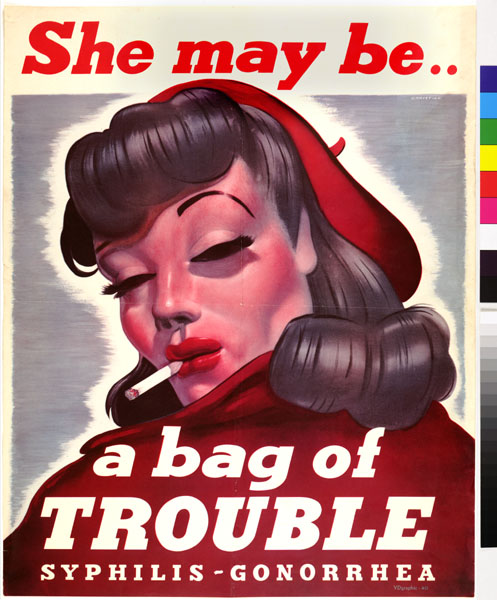 3. DEIFICATION: This is when an idea is made to appear holy, sacred, or very special and therefore above all law. Any alternative or opposite points of view are thereby given the appearance of treason or blasphemy. Examples: "God-given right to...", "Mother Earth", "Gia".
4. TRANSFER: Transfer is when a symbol that carries respect, authority, sanction, and prestige is used along with and idea or argument to make it look more acceptable. Examples: American Flag, University Seal, Medical Association Symbol (or something that looks like it). This method is also called GUILT- or VIRTUE-BY-ASSOCIATION.
5. TESTIMONIAL: When some respected celebrity (or alternatively someone generally hated) claims that an idea or product is good (or bad). This technique is used to convince us without examining the facts more carefully.
6. PLAIN FOLKS: This is a way that a speaker convinces an audience that an idea is good because they are the same ideas of the vast majority of people like yourself. Examples: "This is the will of the People", "Most Americans...". Another example would be when the speaker tells a story about a family or people that are "just like you" to reinforce the speaker's point of view.
7. BAND WAGON: This common propaganda method is when the speaker tries to convince us to accept their point of view or else we will miss out on something really good. The Band-Wagon technique is often used in advertising. Examples: "This is the wave of the future", "Be the first on your block", "Act Now!". You might ask yourself "What if I was the only one on my block because no one else was interested (duped)?".
8. ARTIFICIAL DICHOTOMY: This is when someone tries to claim there are only two sides to an issue and that both sides must have equal presentation in order to be evaluated. This technique is used to dupe us into believing there is only one way to look at an issue, when in fact there may be many alternative viewpoints or "sides". Like most propaganda techniques it simplifies reality and therefore distorts it, often to the advantage of the speaker. A classic example is the "intelligent design" versus "evolution" controversy.
9. HOT POTATO: This is an inflammatory (often untrue) statement or question used to throw an opponent off guard, or to embarrass them. Examples "Have you stopped beating your spouse", "When will you pay the taxes you owe?" The fact that it may be utterly untrue is irrelevant, because it still brings controversy to the opponent.

10. STALLING or IGNORING THE QUESTION : This technique is used to play for more time or to avoid answering a pointed question. Examples: "More research is needed...", "A fact-finding committee is working on this issue..." "I am calling for an investigation on this failure.." When asked about a tax increase possibility a senator replies: "I have always met the obligations I have to those I represent."
11. LEAST-OF-EVILS is used to justify an otherwise unpleasant or unpopular point of view. Example: '"War is hell but appeasement leads to worse disasters".
12. SCAPEGOAT: This often use with Guilt-by-association to deflect scrutiny away from the issues. It transfers blame to one person or group of people without investigating the complexities of the issue. Examples: "George W. Bush got us into Iraq", "President Reagan caused the national debt".
13. CAUSE AND EFFECT MISMATCH: This technique confuses the audience about what is really cause and effect. In fact the causes of most phenomena are complex, and it is misleading to say just one of the following: "Tuberculosis is caused by bacteria", "Tuberculosis is caused by un-regulated capitalism that creates poor working conditions", "Tuberculosis is caused by a lack of effective antibiotics".
 14. DISTORTION OF DATA or OUT OF CONTEXT or CARD STACKING: This technique is used to convince the audience by using selected information and not presenting the complete story. Examples: "A study was done that showed eating peanut butter causes liver cancer" (the fact that later the study was later shown to be flawed or funded by the peanut butter haters and therefore suspect, is not revealed). A variation would be "Raising the speed limit to 65 mph resulted in many fewer traffic fatalities". Such statements need to be checked with how many people were driving before and after the change in speed limit. Fewer people may be driving after the speed limit change, even though the fatality rates (deaths per 100,000) may be higher, leading to the overall result of fewer fatalities.
15. WEAK INFERENCE: Weak inference is when a judgment is made with insufficient evidence, or that the conclusion does not necessarily follow from the evidence given. For example: Ducks and geese migrate south for the winter, therefore all waterfowl migrate south for the winter. Or, most rich folks vote republican, therefore most people who vote republican are rich.
16. FAULTY ANALOGY: This is when a comparison is carried to far. Example: "The economy is following the same path as right before the great depression, therefore we will experience a stock market crash soon!"
17. MISUSE OF STATISTICS: Some examples: Average results are reported, but not the amount of variation around the averages. A percent or fraction is presented, but not the sample size as in "9 out of 10 dentists recommend...". Absolute and proportional quantities are mixed as in "3,400 more robberies occurred in our town last year, whereas other cities hand an increase of less than one percent". Graphs are used that, by chopping off part of the scale or using unusual units or no scale, distort the appearance of the result. Results are reported with misleading precision. For example, representing 13 out of 19 students as 68.42105 percent.
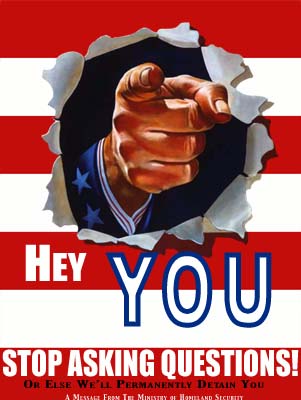 18. Appeal to FEAR: "Of course the people don't want war. But after all, it's the leaders of the country who determine the policy, and it's always a simple matter to drag the people along whether it's a democracy, a fascist dictatorship, or a parliament, or a communist dictatorship. Voice or no voice, the people can always be brought to the bidding of the leaders. That is easy. All you have to do is tell them they are being attacked, and denounce the pacifists for lack of patriotism, and exposing the country to greater danger."
- Appeals to fear and seeks to build support by instilling anxieties and panic in the general population, for example, Joseph Goebbels exploited Theodore Kaufman's Germany Must Perish! to claim that the Allies sought the extermination of the German people.
- 19. Appeal to prejudice: Using loaded or emotive terms to attach value or moral goodness to believing the proposition. Used in biased or misleading ways.
- 20. Appeal to authority: Appeals to authority cite prominent figures to support a position, idea, argument, or course of action.
- Source: http://en.wikipedia.org/wiki/Propaganda
- http://library.thinkquest.org/C0111500/proptech.htm
- http://mason.gmu.edu/~amcdonal/Propaganda%20Techniques.html


 , recognized by the