Showing posts with label Plant. Show all posts

Wednesday, February 9, 2011

15 Houseplants for Improving Indoor Air Quality

In the late '80s, NASA and the Associated Landscape Contractors of America studied houseplants as a way to purify the air in space facilities.
  • They found several plants that filter out common volatile organic compounds . Lucky for us the plants can also help clean indoor air on Earth, which is typically far more polluted than outdoor air. 
  • Other studies have since been published in the Journal of American Society of Horticultural Science further proving the science.

      Aloe (Aloe vera)

This easy-to-grow, sun-loving succulent helps clear formaldehyde and benzene, which can be a byproduct of chemical-based cleaners, paints and more. Aloe is a smart choice for a sunny kitchen window. Beyond its air-clearing abilities, the gel inside an aloe plant can help heal cuts and burns.


_____________________________________________________________________


          Spider plant (Chlorophytum comosum)

Even if you tend to neglect houseplants, you’ll have a hard time killing this resilient plant. With lots of rich foliage and tiny white flowers, the spider plant battles benzene, formaldehyde, carbon monoxide and xylene, a solvent used in the leather, rubber and printing industries.
_________________________________________________________

Gerber daisy (Gerbera jamesonii)

This bright, flowering plant is effective at removing trichloroethylene, which you may bring home with your dry cleaning. It’s also good for filtering out the benzene that comes with inks. Add one to your laundry room or bedroom — presuming you can give it lots of light.


__________________________________________________________________
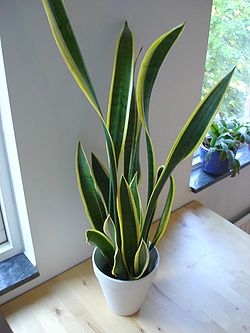
Snake plant (Sansevieria trifasciata 'Laurentii')

Also known as mother-in-law’s tongue, this plant is one of the best for filtering out formaldehyde, which is common in cleaning products, toilet paper, tissues and personal care products. Put one in your bathroom — it’ll thrive with low light and steamy humid conditions while helping filter out air pollutants.


____________________________________________________________________

Golden pothos (Scindapsus aures)

Another powerful plant for tackling formaldehyde, this fast-growing vine will create a cascade of green from a hanging basket. Consider it for your garage since car exhaust is filled with formaldehyde. (Bonus: Golden pothos, also know as devil’s ivy, stays green even when kept in the dark.)


______________________________________________________________________

Chrysanthemum (Chrysantheium morifolium)

The colorful flowers of a mum can do a lot more than brighten a home office or living room; the blooms also help filter out benzene, which is commonly found in glue, paint, plastics and detergent. This plant loves bright light, and to encourage buds to open, you’ll need to find a spot near an open window with direct sunlight.
_______________________________________________________________________

Red-edged dracaena (Dracaena marginata)

The red edges of this easy dracaena bring a pop of color, and the shrub can grow to reach your ceiling. This plant is best for removing xylene, trichloroethylene and formaldehyde, which can be introduced to indoor air through lacquers, varnishes and gasoline.
_______________________________________________________________________

Weeping fig (Ficus benjamina)

A ficus in your living room can help filter out pollutants that typically accompany carpeting and furniture such as formaldehyde, benzene and trichloroethylene. Caring for a ficus can be tricky, but once you get the watering and light conditions right, they will last a long time.


______________________________________________________________________

Azalea (Rhododendron simsii)

Bring this beautiful flowering shrub into your home to combat formaldehyde from sources such as plywood or foam insulation. Because azaleas do best in cool areas around 60 to 65 degrees, they’re a good option for improving indoor air in your basement if you can find a bright spot.


_____________________________________________________________________

English ivy (Hedera helix)

A study found that the plant reduces airborne fecal-matter particles. It has also been shown to filter out formaldehyde found in some household cleaning products.


___________________________________________________________________
Warneck dracaena (Dracaena deremensis 'Warneckii')
Combat pollutants associated with varnishes and oils with this dracaena. The Warneckii grows inside easily, even without direct sunlight. With striped leaves forming clusters atop a thin stem, this houseplant can be striking, especially if it reaches its potential height of 12 feet.


______________________________________________________________________

Chinese evergreen (Aglaonema Crispum 'Deborah')

This easy-to-care-for plant can help filter out a variety of air pollutants and begins to remove more toxins as time and exposure continues. Even with low light, it will produce blooms and red berries.


______________________________________________________________________

Bamboo palm (Chamaedorea sefritzii)

Also known as the reed palm, this small palm thrives in shady indoor spaces and often produces flowers and small berries. It tops the list of plants best for filtering out both benzene and trichloroethylene. They’re also a good choice for placing around furniture that could be off-gassing formaldehyde.


_________________________________________________________________


Heart leaf philodendron (Philodendron oxycardium)

This climbing vine plant isn’t a good option if you have kids or pets — it's toxic when eaten, but it's a workhorse for removing all kinds of VOCs. Philodendrons are particularly good at battling formaldehyde from sources like particleboard.


_____________________________________________________________________

Peace lily (Spathiphyllum 'Mauna Loa')

Shade and weekly watering are all the peace lily needs to survive and produce blooms. It topped NASA’s list for removing all three of most common VOCs — formaldehyde, benzene and trichloroethylene. It can also combat toluene and xylene.


Enhanced by Zemanta

Saturday, October 16, 2010

Aloe Vera Plant [Uses and Benefits]


          Aloe Vera is a species of Aloe, native to northern Africa.Its era has long been a popular houseplant. Often called the 'miracle plant' or the 'natural healer', Aloe Vera is a plant of many surprises. It flourishes in warm and dry climates, and to many people it looks like a cactus with fleshy thorny leaves. In fact it is a member of the Lily family, staying moist where other plants wither and die by closing its pores to prevent moisture loss.

There are around 400 species of Aloe, but it is the Aloe Barbadensis Miller (Aloe Vera or "true aloe") plant which has been of most use to mankind because of the medicinal properties it displays.
     Some species, particularly Aloe vera are used in alternative medicine and in the home first aids. Both the translucent inner pulp and the resinous yellow aloin from wounding the Aloe plant are used externally to relieve skin discomforts. As an herbal medicine, aloe vera juice is commonly used internally to relieve digestive discomfort "aloe for heartburn".
Some modern research suggests Aloe vera can significantly slow wound healing compared to normal protocols of treatment. Other reviews of randomised and controlled clinical trials have provided no evidence that Aloe vera has a strong medicinal effect.

            Today, aloe vera is used both internally and externally on humans. The gel found in the leaves is used for soothing minor burns, wounds, and various skin conditions like eczema and ringworm. The extracted aloe vera juice aloe vera plant is used internally to treat a variety of digestive conditions. The use of this herbal medicine was popularized in the 1950s in many Western countries. The gel's effect is nearly immediate; it also applies a layer over wounds that is said to reduce the chance of any infection.
There have been relatively few studies about possible benefits of Aloe gel taken internally. Components of Aloe may inhibit tumor growth. There have been some studies in animal models which indicate that extracts of Aloe have a significant anti-hyperglycemic effect, and may be useful in treating Type II diabetes. These studies have not been confirmed in humans.
The use of aloe vera is being promoted for a large variety of conditions. The aim of this systematic review was to summarize all dermatology-oriented in vitro and in vivo experiments and clinical trials on aloe vera preparations. Extensive literature search were carried out to identify all in vitro and in vivo studies as well as clinical trials on the subject.
  • Data were extracted from these in a predefined standardized manner. Forty studies were located. The results suggest that oral administration of aloe vera in mice is effective on wound healing, can decrease the number and size of papillomas and reduce the incidence of tumors and leishmania parasitemia by >90% in the liver, spleen, and bone marrow
  • Topical application of aloe vera is not an effective prevention for radiation-induced injuries and has no sunburn or suntan protection. 
  • It can be effective for : 
  1. genital herpes, 
  2. psoriasis,
  3. human papilloma virus, 
  4. seborrheic dermatitis, 
  5. aphthous stomatitis,
  6. xerosis, 
  7. lichen planus,
  8. frostbite, 
  9. burn, 
  10. wound healing and 
  11. inflammation. 
  • It can also be used as a biological vehicle and an anti-microbial and antifungal agent and also as a candidate for photodynamic therapy of some kinds of cancer. Even though there are some promising results with the use of aloe vera for diverse dermatologic conditions, clinical effectiveness of oral and topical aloe vera is not sufficiently and meticulously explored as yet.
  • Tackling mouth ulcers

Aloe vera is an effective treatment for a skin disorder and could be used to treat mouth ulcers, researchers   say.
Gels containing extracts from the plant were found to ease the burning, stinging pain and ulcers associated with oral lichen planus, a chronic inflammatory disorder of the mouth.
Affecting more than 1 in 100 people, persistent mouth ulcers due to lichen planus can give rise to               C
cancerous  changes within the ulcer, and so need to be monitored by a doctor.
Previously the condition has been hard to treat, but a study in the British Journal of Dermatology confirms anecdotal reports that aloe vera gel could help to soothe symptoms.
  • Constipation (laxative)
Dried latex from the inner lining of aloe leaves has been used traditionally as a laxative taken by mouth. Although few studies have been conducted to assess this effect of aloe in humans, the laxative properties of aloe components such as aloin are well supported by scientific evidence. A combination herbal remedy containing aloe was found to be an effective laxative, although it is not clear if this effect was due to aloe or to other ingredients in the product. Further study is needed to establish dosing and to compare the effectiveness and safety of aloe with other commonly used laxatives.
 B
  • Genital herpes
Limited evidence from human studies suggests that extract from Aloe vera in a hydrophilic cream may be an effective treatment of genital herpes in men (better than aloe gel or placebo). Additional research is needed in this area before a strong recommendation can be made.
B
  • Psoriasis vulgaris
Early evidence suggests that an extract from aloe in a hydrophilic cream may be an effective treatment of psoriasis vulgaris. Additional research is needed in this area before a strong recommendation can be made.
B
  • Seborrheic dermatitis (seborrhea, dandruff)
Early study of aloe lotion suggests effectiveness for treating seborrheic dermatitis when applied to the skin. Further study is needed in this area before a strong recommendation can be made.
B
  • Cancer prevention
There is early evidence that oral aloe may reduce the risk of developing lung cancer. Further study is needed in this area to clarify if it is aloe itself or other factors that may cause this benefit. 
  C
  • Canker sores (aphthous stomatitis)
There is weak evidence that treatment of recurrent aphthous ulcers of the mouth with aloe gel may reduce pain and increase the amount of time between the appearance of new ulcers. Further study is needed before a firm recommendation can be made.
C
  • Diabetes (type 2)
Study results are mixed. More research is needed to explore the effectiveness and safety of aloe in diabetics.
C
 
  • Dry skin
Traditionally, aloe has been used as a moisturizer. Early low-quality studies suggest aloe may effectively reduce skin dryness. Higher quality studies are needed in this area
C
  • HIV infection
Without further human trials, the evidence cannot be considered convincing either in favor or against this use of aloe.
C
  • Lichen planus
Limited study suggests that aloe may be a helpful, safe treatment for lichen planus, which is a chronic inflammatory disease that affects the lining of the mouth. Additional study is needed.
C
  • Skin burns
Early evidence suggests that aloe may aid healing of mild to moderate skin burns. Further study is needed in this area.
C
  • Skin ulcers
Early studies suggest aloe may help heal skin ulcers. High-quality studies comparing aloe alone with placebo are needed.
C
  • Ulcerative colitis (including inflammatory bowel disease)
There is limited but promising research of the use of oral aloe vera in ulcerative colitis (UC), compared to placebo. It is not clear how aloe vera compares to other treatments used for UC.
C
  • Wound healing
Study results of aloe on wound healing are mixed with some studies reporting positive results and others showing no benefit or potential worsening of the condition. Further study is needed, since wound healing is a popular use of topical aloe.
C
  • Mucositis
There is early evidence that oral aloe vera does not prevent or improve mucositis (mouth sores) associated with radiation therapy.
D
  • Pressure ulcers
Early well-designed studies in humans found no benefit of topical acemannan hydrogel (a component of aloe gel) in the treatment of pressure ulcers.
D
  • Radiation dermatitis
Reports in the 1930s of topical aloe's beneficial effects on skin after radiation exposure lead to widespread use in skin products. Currently, aloe gel is sometimes recommended for skin irritation caused by prolonged exposure to radiation, although scientific evidence suggests a lack of benefit in this area.
D
      Key to grades
A Strong scientific evidence for this use
B Good scientific evidence for this use
C Unclear scientific evidence for this use
D Fair scientific evidence against this use (it may not work)
F Strong scientific evidence against this use (it likely does not work)


Source: 
http://findarticles.com/p/articles/mi_m0FKA/is_4_69/ai_n18791510.  "aloe alt med". http://altmedicine.about.com/od/therapiesfrometol/a/heartburn.htm.  "Aloe IBS study"
http://www.medscape.com/viewarticle/546327
http://www.timesonline.co.uk/tol/life_and_style/health/article3065814.ece
http://www.mayoclinic.com/health/aloe-vera/NS_patient-aloe/DSECTION=evidence
http://www.ncbi.nlm.nih.gov/pubmed/19218914
Enhanced by Zemanta

Monday, August 9, 2010

Common houseplants used against indoor air pollution

          Common indoor plants may provide a valuable weapon in the fight against rising levels of indoor air pollution. NASA scientists are finding them to be surprisingly useful in absorbing potentially harmful gases and cleaning the air inside homes, indoor public spaces and office buildings.

         The indoor pollutants that affect health are formaldehyde, Volatile Organic Compounds (benzene and trichloroethylene or TCE), airborne biological pollutants, carbon monoxide and nitrogen oxides, pesticides and disinfectants (phenols), and radon. These pollutants contribute to ’sick building sindrome’, which causes symptoms ranging from allergies; headaches and fatigue through to 
nervous-system disorders;
cancer and death.


Top ten plants for removing formaldehyde, benzene, and carbon monoxide from the air:

1. Areca Palm (Chrysalidocarpus lutescens)

Also called the “Butterfly Palm”. An upright houseplant that is somewhat vase shaped. Specimen plants can reach 10 to 12 foot in height. Prefers a humid area to avoid tip damage. Requires pruning. When selecting an Areca palm look for plants with larger caliber trunks at the base of the plant. Plants that have pencil thin stems tend to topple over and are quite difficult to maintain.

2. Lady Palm (Rhapis excelsa)

Also called the “Lady Palm”, this durable palm species adapts well to most interiors. The Rhapis are some of the easiest palms to grow, but each species has its own particular environment and culture requirements. The “Lady Palm” grows slowly, but can grow to more than 14′ in height with broad clumps often having a diameter as wide as their height.

3. Bamboo palm (Chamaedorea seifrizii)

Also called the “reed palm”, this palm prefers bright indirect light. New plants will lose of some interior foliage as they acclimate to indoor settings. This plant likes to stay uniformly moist, but does not like to be over-watered or to sit in standing water. Indoor palms may attract spider mites which can be controlled by spraying with a soapy solution.

4. Rubber Plant (Ficus robusta)

Grows very well indoors, preferring semi-sun lighting. Avoid direct sunlight, especially in summer. Young plants may need to be supported by a stake. The Ficus grows to 8’ with a spread of 5’. Wear gloves when pruning, as the milky sap may irritate the skin. Water thoroughly when in active growth, then allow the soil to become fairly dry before watering again. In winter keep slightly moist.

5. Dracaena “Janet Craig” (Dracaena deremensis)

The Dracaena grows to 10’ with a spread of 3’. Easy to grow, these plants do best in bright indirect sunlight coming from the east/west. They can adapt to lower light levels if the watering is reduced. Keep the soil evenly moist and mist frequently with warm water. Remove any dead leaves. Leaf tips will go brown if the plant is under watered but this browning may be trimmed.

6. Philodendron (Philodendron sp.)

One of the most durable of all house plants. Philodendrons prefer medium intensity light but will tolerate low light. Direct sun will burn the leaves and stunt plant growth. This plant is available in climbing and non-climbing varieties. When grown indoors, they need to be misted regularly and the leaves kept free of dust. Soil should be evenly moist, but allowed to dry between watering.

7. Dwarf Date Palm (Phoenix roebelenii)

A hardy, drought-tolerant and long-lived plant, the Dwarf Date Palm needs a bright spot which is free of drafts. It grows slowly, reaching heights of 8-10’. The Dwarf Date Palm should not be placed near children’s play areas because it has sharp needle-like spines arranged near the base of the leaf stem. These can easily penetrate skin and even protective clothing.

8. Ficus Alii (Ficus macleilandii “Alii”)

The Ficus Alii grows easily indoors, and resists insects. It prefers a humid environment and low to medium light when grown indoors. The Ficus Aliii should not be placed near heating or air conditioning vents, or near drafts because this could cause leaf loss. Soil should be kept moist but allowed to dry between watering.

9. Boston Fern (Nephrolepis exaltata “Bostoniensis”)

The Boston fern grows to 4’ in height with a spread up to 5’. It has feathery ferns which are best displayed as a hanging plant. It prefers bright indirect sunlight. Keep the soil barely moist and mist frequently with warm water. This plant is prone to spider mites and whitefly which can be controlled using a soapy water spray. Inspect new plants for bugs before bringing them home.

10. Peace Lily (Spathiphyllum “Mauna Loa”)

The Peace Lily is a compact plant which grows to a height of 3’ with a 2’ spread. This hardy plant tolerates neglect. It prefers indirect sunlight and high humidity, but needs to be placed out of drafts. For best results, the Peace Lily should be thoroughly watered, then allowed to go moderately dry between waterings. The leaves should be misted frequently with warm water.
Enhanced by Zemanta