Click the link below to view the question and/or answer it:
http://www.medpedia.com/questions/2420-is-abortion-a-medical-issue-or-is-it-a-moral-issue-or-a-legal-issue
Wednesday, February 9, 2011
Sunday, February 6, 2011
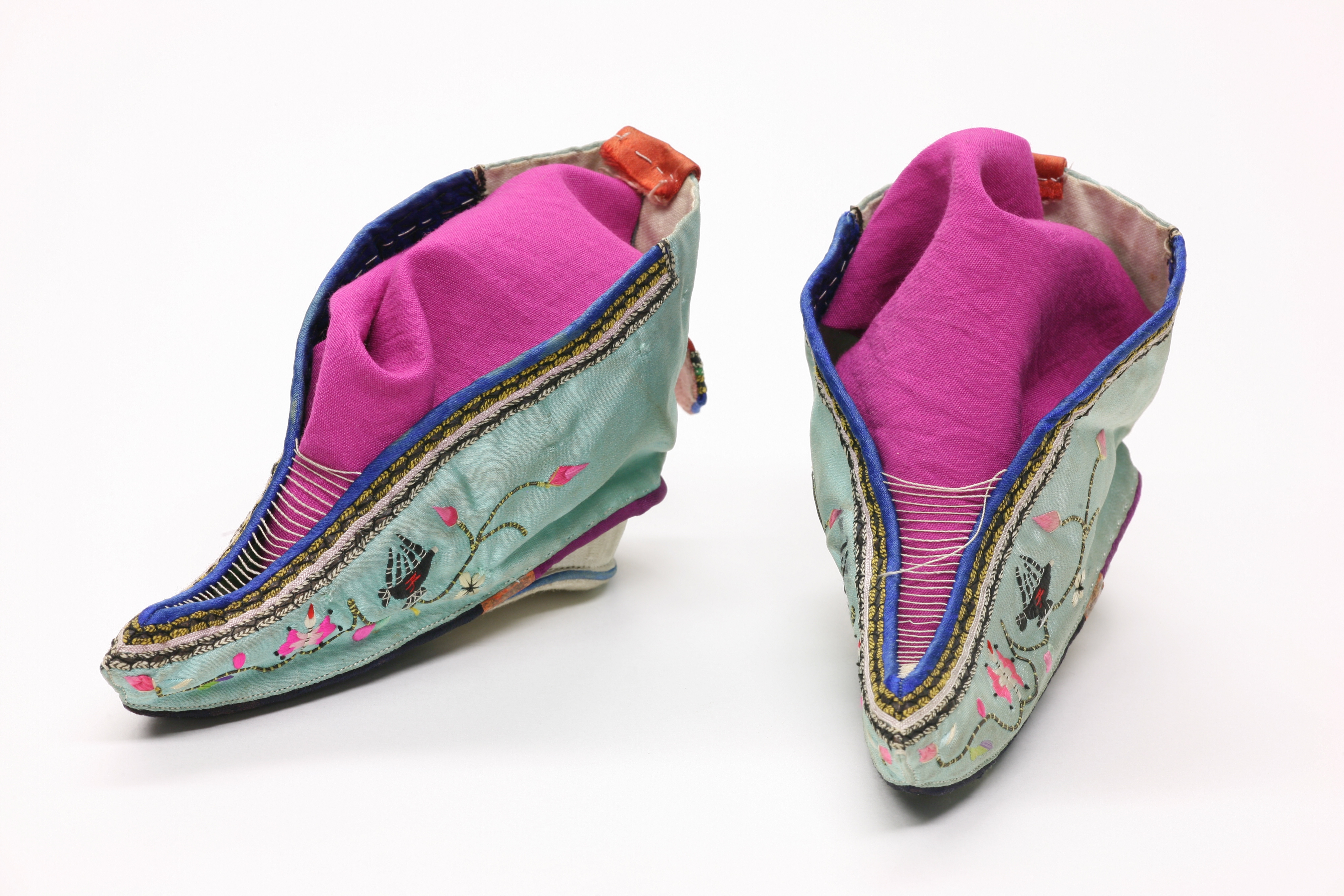
Consequences of 'Foot Binding' among Women in China
 Foot binding was a custom practiced on young girls and women for approximately one thousand years in China, beginning in the 10th century and ending in the first half of 20th century.
Foot-binding resulted in lifelong disabilities for most of its practitioners. As the practice waned in the early 20th century, "some girls' feet were released after initial binding, leaving less severe deformities," according to a study conducted by the University of California, San Francisco. However, some effects of foot-binding were permanent, especially if a girl's arches or toes had been broken or other drastic measures taken in order to achieve the desired smallness. In the 1990s and early 2000s, some elderly (born until mid-1940s) Chinese women still suffered from disabilities related to bound feet.
Legend has it that the origins of footbinding go back as far as the Shang dynasty (1700-1027 B.C.). The Shang Empress had a clubfoot, so she demanded that footbinding be made compulsory in the court.
But historical records from the Song dynasty (960-1279 A.D.) date footbinding as beginning during the reign of Li Yu, who ruled over one region of China between 961-975. It is said his heart was captured by a concubine, Yao Niang, a talented dancer who bound her feet to suggest the shape of a new moon and performed a "lotus dance."
During subsequent dynasties, footbinding became more popular and spread from court circles to the wealthy. Eventually, it moved from the cities to the countryside, where young girls realized that binding their feet could be their passport to social mobility and increased wealth.
- However, there is little strong textual evidence for the custom prior to the court of the Southern Tang dynasty in Nanjing, which celebrated the fame of its dancing girls, renowned for their tiny feet and beautiful bow shoes. What is clear is that foot binding was first practised among the elite and only in the wealthiest parts of China, which suggests that binding the feet of well-born girls represented their freedom from manual labor and, at the same time, the ability of their husbands to afford wives who did not need to work, who existed solely to serve their men and direct household servants while performing no labor themselves.
- When the Manchu nobility came to power in 1644, they tried to ban the practice, but with little success. The first anti-footbinding committee was formed in Shanghai by a British priest in 1874.
- A year after the Communists came to power in 1949, they too issued their own ban on footbinding. According to the American author William Rossi, who wrote The Sex Life of the Foot and Shoe, 40 percent to 50 percent of Chinese women had bound feet in the 19th century. For the upper classes, the figure was almost 100 percent.
Some estimate that as many as 2 million Chinese women broke and bound their feet to attain this agonizing ideal of physical perfection. Author Yang Yang says that women with tiny feet were a status symbol who would bring honor upon the entire clan by their appearance. - The economic and social attractions of such women may well have translated into sexual desirability among elite men.

 And 86-year-old Zhou Guizhen says, "At that time everybody had bound feet. If you didn't, you'd only be able to marry a tribesman from an ethnic minority."
 - These women disfigured their feet to guarantee their own future, but according to Yang Yang, this act ultimately consigned them to tragic lives. Most of Liuyicun's bound-feet women were forced to perform hard physical labor in the late 1950s, digging reservoirs, for example — work which was punishing enough for ordinary women, but agonizing for those with tiny, misshapen feet.
Their families also suffered food shortages as they were often unable to fulfill their production quotas at work, or walk into the mountains to pick vegetables and fruit like other mothers.
"Their tiny feet sealed their tragic fates," Yang says
A case study of Chinese bound feet: application of footprint analysis: Foot print patterns of the bound feet of a 90-year-old Chinese female were made to obtain insight into the ergonomic consequences of a Chinese custom that caused significant disabilities for many women throughout history. Pressure patterns were evaluated using the techniques applied to standard thumb print analysis.
A digital summary of the pressure patterns were compared to the patterns obtained from a normal subject. The outcomes indicated that the bound foot produced greater plantar tissue pressures than the non-bound foot. These observations help explain the discomfort, gait abnormalities, and disabilities exhibited by many older women with bound feet living in China today. Although foot-binding is no longer practiced, this study offers an ergonomic perspective on a custom practiced in China for centuries.
Sources:
Case: More Pictures http://fabulously40.com/article/id/honey-i-shrunk-your-feet-2360
http://www.sfmuseum.org/chin/foot.html
http://www.npr.org/templates/story/story.php?storyId=8966942
http://www.ncbi.nlm.nih.gov/pmc/articles/PMC1381134/

Friday, February 4, 2011
Support a Charity Just by Watching YouTube
Do Something - Thumb Wars PSA

What makes the site interesting is its emphasis on providing a service not just to users looking for videos, but to the non-profits looking for help. Charities usually have to fight for two things: exposure and funding. VISO Give helps with both. VISO, the consumer branch of BroadbandTV, already rakes in more than 1 billion impressions through YouTube, via its video game and movie trailers channels. That built-in fan base will hopefully convert to the new channel and send new eyeballs to non-profits of all sizes.
~~~~~~~~~~~~~~~~~~~~~~~~~~~~~~~~~~~~~~~~~~~~~~~~~~~~~~~~~~~~~~~~~~~~~~~~~~
~~~~~~~~~~~~~~~~~~~~~~~~~~~~~~~~~~~~~~~~~~~~~~~~~~~~~~~~~~~~~~~~~~~~~~~~~~Big Cat Rescue - Bobcat Kittens!
VISO Give has already partnered with a number of non-profits, including Livestrong and the United Way, but hopes to expand and grow its catalogue.
What do you think? Is VISO Give something you’d check out? What’s the merit of potentially passive philanthropy like this, as opposed to direct fundraising or awareness campaigns? Let us know in the comments below.

Wednesday, February 2, 2011
Causes of Amenorrhea
What is Amenorrhea?
 Amenorrhea is the absence of menstrual bleeding. Amenorrhea is a normal feature in :
In females of reproductive age, diagnosing amenorrhea is a matter of first determining whether pregnancy is the etiology. In the absence of pregnancy, the challenge is to determine the exact cause of absent menses. This article reviews the physiologic aspects of menstruation and presents an approach for ascertaining the etiology of amenorrhea. Only the main components of amenorrhea are highlighted. Many minor components of physiology are important but are beyond the scope of this article.
The menstrual cycle can be divided into 3 physiologic phases: follicular, ovulatory, and luteal. Each phase has a distinct hormonal secretory milieu. When one diagnoses the disease processes responsible for amenorrhea, consideration of the target organs of these reproductive hormones (hypothalamus, pituitary, ovary, uterus) is helpful.
Secondary amenorrhea is defined as the cessation of menstruation for at least 6 months or for at least 3 of the previous 3 cycle intervals. Because only 3 diagnoses are unique to primary amenorrhea and never cause secondary amenorrhea, differentiating primary from secondary amenorrhea does little to enhance the clinician's understanding of the etiology.
The causes of amenorrhea are listed below. Organize clinical evaluation on the basis of sexual development and basic developmental physiology. With such a vast differential diagnosis, one way to organize and memorize the causes of amenorrhea can be in its relationships with generalized pubertal delay, normal pubertal development, or abnormalities of the genital tract.

 Amenorrhea is the absence of menstrual bleeding. Amenorrhea is a normal feature in :
- prepubertal,
- pregnant,
- postmenopausal females.
In females of reproductive age, diagnosing amenorrhea is a matter of first determining whether pregnancy is the etiology. In the absence of pregnancy, the challenge is to determine the exact cause of absent menses. This article reviews the physiologic aspects of menstruation and presents an approach for ascertaining the etiology of amenorrhea. Only the main components of amenorrhea are highlighted. Many minor components of physiology are important but are beyond the scope of this article.
Pathophysiology
The menstrual cycle is an orderly progression of hormonal events in the female body that results in the release of an egg. Menstruation occurs when an egg released by the ovary remains unfertilized; subsequently, the soggy decidua of the endometrium (which was primed to receive a fertilized egg) is sloughed in a flow of menses in preparation for another cycle.The menstrual cycle can be divided into 3 physiologic phases: follicular, ovulatory, and luteal. Each phase has a distinct hormonal secretory milieu. When one diagnoses the disease processes responsible for amenorrhea, consideration of the target organs of these reproductive hormones (hypothalamus, pituitary, ovary, uterus) is helpful.
Primary and Secondary Amenorrhea
Primary amenorrhea is defined either as absence of menses by age 14 years with the absence of growth or development of secondary sexual characteristics (eg, breast development) or as absence of menses by age 16 years with normal development of secondary sexual characteristics.Secondary amenorrhea is defined as the cessation of menstruation for at least 6 months or for at least 3 of the previous 3 cycle intervals. Because only 3 diagnoses are unique to primary amenorrhea and never cause secondary amenorrhea, differentiating primary from secondary amenorrhea does little to enhance the clinician's understanding of the etiology.
The causes of amenorrhea are listed below. Organize clinical evaluation on the basis of sexual development and basic developmental physiology. With such a vast differential diagnosis, one way to organize and memorize the causes of amenorrhea can be in its relationships with generalized pubertal delay, normal pubertal development, or abnormalities of the genital tract.
Causes of amenorrhea
Amenorrhea can be caused by any number of changes in the organs, glands, and hormones involved in menstruation.
Possible causes of primary amenorrhea (when a woman never gets her first period) include:
- Failure of the ovaries (female sex organs that hold eggs).
- Problems in the central nervous system (brain and spinal cord) or the pituitary gland (a gland in the brain that makes hormones involved in menstruation).
- Poorly formed reproductive organs.
In many cases, the cause of primary amenorrhea is not known.
Common causes of secondary amenorrhea (when a woman who has had normal periods stops getting them) include:
- Pregnancy
- Breast feeding
- Stopping the use of birth control
- Menopause
- Some birth control methods, such as Depo-Provera
Other causes of secondary amenorrhea include:
- Stress
- Poor nutrition
- Depression
- Certain drugs
- Extreme weight loss
- Over-exercising
- Ongoing illness
- Sudden weight gain or being very overweight (obesity)
- Hormonal imbalance due to polycystic ovarian syndrome (PCOS)
- Thyroid gland disorders
- Tumors on the ovaries or brain (rare)
A woman who has had her uterus or ovaries removed will also stop menstruating.
Sources:
Tuesday, February 1, 2011
Improved Treatment for Severe Malaria Saves More Lives
Malaria kills around one million people every year, with nine in ten deaths being in young African children. 
But wider obstacles remain: WHO treatment recommendations have yet to be revised in light of the latest evidence in children, and most countries have yet to recommend artesunate in place of quinine for either adults or children. And international donors have yet to put their full weight behind the latest evidence.

- Severe malaria, marked by serious symptoms such as coma, convulsions, or difficulty breathing, progresses rapidly and is particularly deadly. Those who manage to survive are often left with life-long neurological damage.

- Severe malaria is still mostly treated with the drug quinine, while uncomplicated malaria is treated with drugs containing derivates of artemisinin, an extract from a Chinese plant. In early 2010, the World Health Organization (WHO) strongly recommended that adults with severe malaria be treated with artesunate, a derivate of artemisinin, because it is more effective and has fewer side effects than quinine.
But wider obstacles remain: WHO treatment recommendations have yet to be revised in light of the latest evidence in children, and most countries have yet to recommend artesunate in place of quinine for either adults or children. And international donors have yet to put their full weight behind the latest evidence.
Breakthrough Meningitis Vaccine Developed for Africa at Affordable Price

A new conjugate vaccine against meningococcus A costing only $0.5 (£0.3; €0.4) a dose that has been developed for use in Africa is about to be introduced for the first time in a national vaccination programme in Burkina Faso, researchers announced.
- The campaign to vaccinate all children and young adults from the ages of 1 to 29 years with the vaccine, MenAfriVac, will begin in Burkina Faso on 6 December. Niger and Mali will follow with similar vaccination campaigns.
Countries in the so called meningitis belt in sub-Saharan Africa—from Senegal in the west to Somalia in the east—have had regular epidemics of meningococcal meningitis for the past century. Almost all of the major outbreaks are caused by group A Neisseria menigitidis.
Sources:

LIFETIME: What would it mean for us to be Immortal?
In this four-programme series, string theory pioneer Michio Kaku goes on an extraordinary exploration of the world in search of time.He discovers our sense of time passing and the clocks that drive our bodies. He reveals the forces of time that make and destroy us in a lifetime. He journeys to some of the Earth's most spectacular geological sites to look for clues to the extraordinary depths of time at a planetary level. Finally, he takes us on a cosmic journey in search of the beginning (and the end) of time itself.
http://www.bbc.co.uk/bbcfour/documentaries/features/time.shtml

 | 1. DAYTIME Monday 30 July 2007 11pm-midnight Time seems to drive every moment. It's the most inescapable force we feel. But do we experience time from within our minds and bodies or from the outside?  Further details about the episode Further details about the episode | ||||||
 | |||||||
 | 2. LIFETIME Monday 6 August 2007 11pm-midnight The most powerful effect of time on our lives is the way it limits us. Our knowledge of death is so embedded in our lives and spirituality that, were immortality possible, would we lose the sense that makes us human? Further details about the episode | ||||||
| |||||||
 | 3. EARTH TIME Monday 13 August 2007 11pm-midnight TBC We hold a unique knowledge of time, realising that it stretches deep into the past, and will continue into the future. How does this affect our sense of who we are? Further details about the episode | ||||||
| |||||||
 | 4. COSMIC TIME Monday 20 August 2007 11pm-midnight TBC We've always structured our lives based on an unchanging past and a predictable and ordered future. But atomic and cosmic discoveries have changed all that. What is time itself? And will it ever end? Further details about the episode | ||||||
http://www.bbc.co.uk/bbcfour/documentaries/features/time.shtml
Subscribe to:
Posts (Atom)