Showing posts with label Sleep disorder. Show all posts

Wednesday, October 13, 2010

What is Sexsomnia. Is it Real...?

aSleep sex or sexsomnia is a form of non-rapid eye movement (NREM) parasomnia (similar to sleepwalking) that causes people to engage in sexual acts such as masturbation, fondling, sexual intercourse and sexual assault or rape while they are asleep. The proposed medical diagnosis is NREM Arousal Parasomnia - Sexual Behavior in Sleep, and is considered to be a distinct variant of sleepwalking .There are often unpleasant consequences associated with sleep sex and it has been used as a criminal defense in rape cases. Other negative effects include feelings of shame and embarrassment and also can cause relationship issue and stress.
Sex, Sleep or Scrabble?: Seriously Funny Answers to Life's Quirkiest Queries             Those who suffer from sexsomnia have confusional arousals and rarely remember the event. People who have a history of doing other sleep activities such as sleepwalking or sleep talking are more likely to exhibit sexsomnia episodes. Factors that may increase episodes of sleep sex are alcohol, sleep deprivation or even sleep apnea and other sleep disruptions.
 Sexsomnia episodes could be triggered by the contact with bed partner.In some cases sexualised movements during sleep could be caused by sleep related epilepsy which results in sexual arousal, thrusting and orgasms.
Simple sexualised movements could be also associated with REM sleep disorders.    
If rape has been committed, it can be psychologically and physically devastating to the individual.
There have been reports of men injuring themselves during sadistic masturbation acts or humping metal or brick walls. Sexsomnia is a disorder that affects males and females. Isolated reports exist about women who have had sex with strangers during the sleep period; in cases where memory of the sexual act is not retained, the detection of used condoms and semen stains on the bed the morning after the sexual incident are signs of the afflictioon.

Cases reported in the press

  1. Natalie Pona, the then Sun reporter, broke the story of the first case of sexsomnia in the fall of 2005. On 30 November 2005, a Toronto court acquitted a man of sexual assault after he was diagnosed with sleep sex disorder, although prosecutors filed an appeal of the acquittal in February 2006. The Ontario Court of Appeal upheld the acquittal on 7 February 2008.
  2. In Britain, a man from York was cleared of three counts of rape on 19 December 2005.
  3. In Australia, a woman was reported as leaving her house at night and having sex with strangers while sleepwalking.
  4. On 8 August 2007, a British RAF mechanic was cleared of a rape charge after the jury found him not responsible for his actions when he had sex with a 15-year-old girl.
  5. On 23 March 2009, a British woman gave an interview in which she spoke about problems in her life caused by sexsomnia.
  6. On 12 February 2010, an Australian man was found not guilty of rape due to sexsomnia.
What appear to be the criteria or characteristics of a sexsomniac? :
  • Most people who exhibit this behavior are known sleepwalkers – either in childhood or more recently in their lives.
  • The sexual behavior of the individual during episodes of sexsomnia is different than their usual behavior, sometimes more aggressive than usual.
  • The behavior is always amplified by situations where sleep quality or quantity is worsened:
  • o Alcohol ingestion o Sleep Apnea o Sleep deprivation
  • Many of the patients were men.
  • Several patients report that they were dreaming about having sex, or having some type of sexual fantasy.
  • Some of the individuals who reported these behaviors were actually physically sexually aroused, but not all were.
  • This behavior seems to occur in deep non-REM sleep at anytime throughout the night.
  • The behavior can last up to 30 min.
  • The behavior is found almost exclusively in adults.
Sexsomnia appears to be a situation that warrants further study. If you are experiencing these behaviors you should tell your doctor or sleep specialist immediately as there have been reported cases of deviant sexual behavior leading to, in some cases, abusive situations.
 
Source:http://blogs.webmd.com/sleep-disorders/2010/04/is-sexsomnia-real.html
http://en.wikipedia.org/wiki/Sleep_sex
http://www.sleepsex.org/

Sunday, September 26, 2010

REM and NREM Sleep

  • Overview
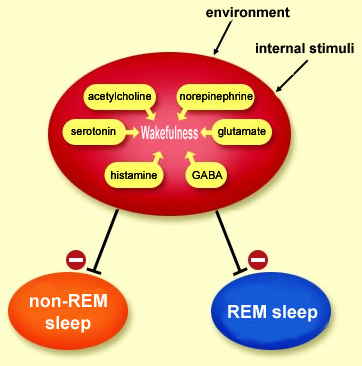
    Normal sleep has 2 distinct states:
  1. non-rapid eye movement (NREM)
  2. rapid eye movement (REM) sleep.   
NREM sleep is divided into 4 stages.During REM sleep, rapid eye movements occur,
  •  breathing becomes irregular, 
  • blood pressure rises, 
  • and there is loss of muscle tone (paralysis). However, the brain is highly active, and the electrical activity recorded in the brain by EEG during REM sleep is similar to that recorded during wakefulness. REM sleep is usually associated with dreaming. REM sleep accounts for 20-25% of the sleep period.
In a person with REM sleep behavior disorder (RBD), the paralysis that normally occurs during REM sleep is incomplete or absent, allowing the person to "act out" his or her dreams. RBD is characterized by the acting out of dreams that are vivid, intense, and violent. Dream-enacting behaviors include talking, yelling, punching, kicking, sitting, jumping from bed, arm flailing, and grabbing. An acute form may occur during withdrawal from alcohol or sedative-hypnotic drugs.
RBD is usually seen in middle-aged to elderly people (more often in men).


  • REM Sleep Disorder Causes
The exact cause of REM sleep behavior disorder (RBD) is unknown, although the disorder may occur in association with various degenerative neurological conditions such as Parkinson disease, multisystem atrophy, diffuse Lewy body dementia, and Shy-Drager syndrome. In 55% of persons the cause is unknown, and in 45%, the cause is associated with alcohol or sedative-hypnotic withdrawal, tricyclic antidepressant (such as imipramine), or serotonin reuptake inhibitor use (such as fluoxetine, sertraline, or paroxetine) or other types of antidepressants (mirtazapine).

RBD often precedes the development of these neurodegenerative diseases by several years. In one study, 38% of patients diagnosed with RBD subsequently developed Parkinson disease within an average time of 12-13 years from the onset of RBD symptoms. The prevalence of RBD is increased in persons with Parkinson disease and in multisystem atrophy where it is observed in 69% of these patients. The relationship between RBD and Parkinson disease is complex; however, not all persons with RBD develop Parkinson disease.
  • REM Sleep Disorder Symptoms
The main symptom of REM sleep behavior disorder is dream-enacting behaviors, sometimes violent, causing self-injury or injury to the bed partner.
The dream-enacting behaviors are usually nondirected and may include punching, kicking, leaping, or jumping from bed while still asleep.
The person may be awakened or may wake spontaneously during the attack and vividly recall the dream that corresponds to the physical activity.
  • When to Seek Medical Care  
Seek medical care if unusual behaviors, such as violent thrashing and kicking, occur during sleep.
  • Exams and Tests
Neurologic examination
The neurologic examination is often normal. However, symptoms and signs of Parkinson disease, such as hand tremor at rest, slowness in movement, and muscle stiffness (rigidity) that may suggest an underlying neurologic cause of REM sleep behavior disorder (RBD), should be considered.

Polysomnography

Polysomnographic video recording is the single most important diagnostic test in persons with RBD. This test is usually conducted in a sleep study center. The person undergoing testing is required to sleep at the center while the following parameters are monitored:
  • Electrical activity of the brain (electroencephalogram [EEG])

  • Electrical activity of the heart (electrocardiogram [ECG])

  • Movements of the muscles (electromyogram)

  • Eye movements (electrooculogram)

  • Respiratory movements
These parameters are monitored as the person passes through the various sleep stages. Characteristic patterns from the electrodes are recorded while the person is awake and during sleep. Continuous video recording is done to observe behaviors during sleep. In persons with RBD, the polysomnogram shows an increase in the muscle tone associated with the EEG pattern of REM sleep, whereas in healthy persons, the EEG pattern of REM sleep is associated with an absence of muscle tone (atonia).
Additionally, the video recording shows body movements coinciding with the EEG pattern of REM sleep.
Imaging studies 
Imaging studies (for example, CT scan and MRI of the brain) are not routinely indicated in persons who have no neurologic cause of RBD, but they may be done if some abnormality is detected during neurologic examination. Imaging studies should also be considered in younger patients (younger than age 40) where there is no known precipitant cause such as alcohol or medication use (see Causes).

Medications

Clonazepam (Klonopin) is highly effective in the treatment of REM sleep behavior disorder (RBD), relieving symptoms in nearly 90% of patients with little evidence of tolerance or abuse. The response usually begins within the first week, often on the first night. The initial dose is 0.5 mg at bedtime, with some persons requiring a rapid increase to 1 mg. With continued treatment for years, moderate limb twitching with sleep talking and more complex behaviors can reemerge. The treatment should be continued indefinitely, as violent behaviors and nightmares promptly recur with discontinuation of medications in almost all persons with RBD.
Other medications, such as tricyclic antidepressants, may be effective in some persons with RBD. However, tricyclics are also known to precipitate RBD in some patients.
Source
         

For More Information

American/National Academy of Sleep Medicine
National Sleep Foundation
National Center on Sleep Disorders Research
National Heart, Lung, and Blood Institute
Enhanced by Zemanta

Tuesday, September 7, 2010

What your sleeping position says about you ...


Foetus
Those who curl up in the foetus position are described as tough on the outside but sensitive at heart. They may be shy when they first meet somebody, but soon relax. This is the most common sleeping position, adopted by 41% of the 1,000 people who took part in the survey. More than twice as many women as men tend to adopt this position. 
Log
Lying on your side with both arms down by your side. These sleepers are easy going, social people who like being part of the in-crowd, and who are trusting of strangers. However, they may be gullible.
Yearner
People who sleep on their side with both arms out in front are said to have an open nature, but can be suspicious, cynical. They are slow to make up their minds, but once they have taken a decision, they are unlikely ever to change it. 
Soldier
Lying on your back with both arms pinned to your sides. People who sleep in this position are generally quiet and reserved. They don't like a fuss, but set themselves and others high standards. 
Freefall
Lying on your front with your hands around the pillow, and your head turned to one side. Often gregarious and brash people, but can be nervy and thin-skinned underneath, and don't like criticism, or extreme situations. 
Starfish
Lying on your back with both arms up around the pillow. These sleepers make good friends because they are always ready to listen to others, and offer help when needed. They generally don't like to be the center of attention.
* The remainder of those in the poll said the position they fell asleep varied or did not know.
*Professor Idzikowski also examined the effect of various sleeping positions on health. He concluded that the free-fall position was good for digestion, while the starfish and soldier positions were more likely to lead to snoring and a bad night's sleep.* Professor Idzikowski said "Lying down flat means that stomach contents can more readily be worked back up into the mouth, while those who lie on their back may end up snoring and breathing less well during the night. "Both these postures may not necessarily awaken the sleeper but could cause a less refreshing night's sleep."
*The research also found that most people are unlikely to change their sleeping position. Just 5% said they sleep in a different position every night.


Enhanced by Zemanta